Prosthodontics is a specialized branch of dentistry focused on the restoration and replacement of missing teeth using various techniques, materials, and dental prostheses.
There are two main categories within prosthodontics:
- Removable Prosthodontics: This includes the fabrication of different types of dentures that the patient can insert and remove independently. Removable dentures restore both function and appearance, helping patients eat, speak, and smile with confidence.
- Fixed Prosthodontics: Fixed prosthetic work refers to crowns and bridges that are permanently attached to natural teeth or dental implants. These restorations provide a durable, aesthetic, and functional solution, closely mimicking the appearance and strength of natural teeth.
Whether through removable dentures or fixed prostheses, our goal is to restore the health, function, and beauty of your smile with tailored solutions designed to meet your specific needs.
Ceramic Crowns
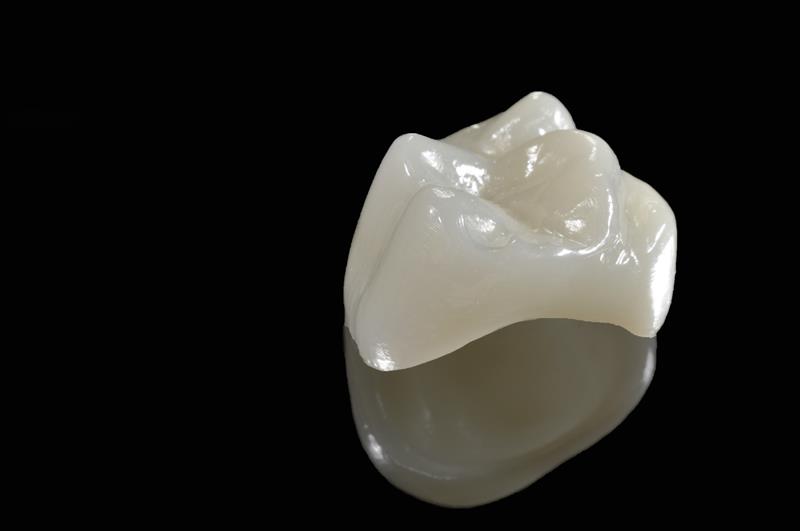
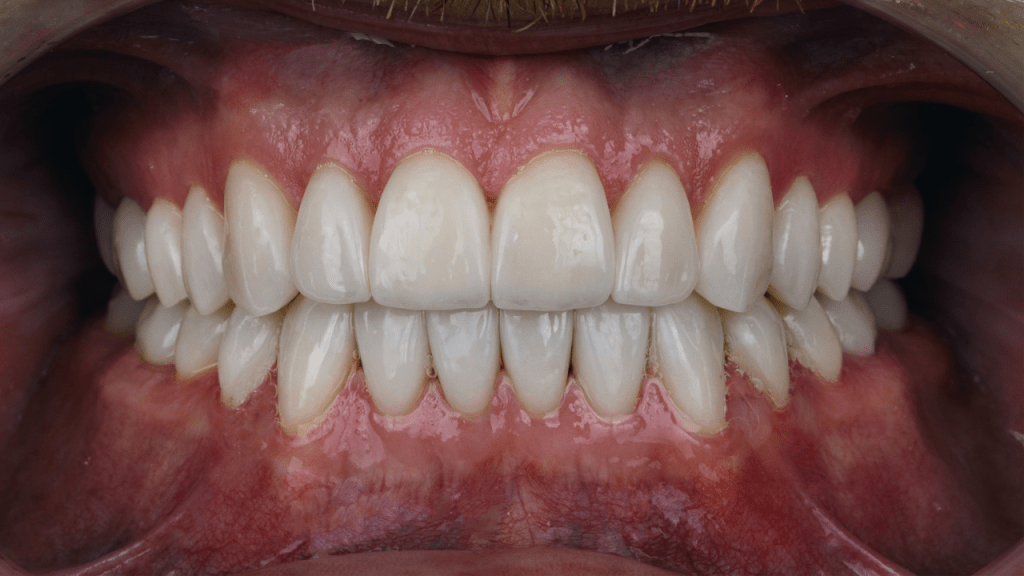
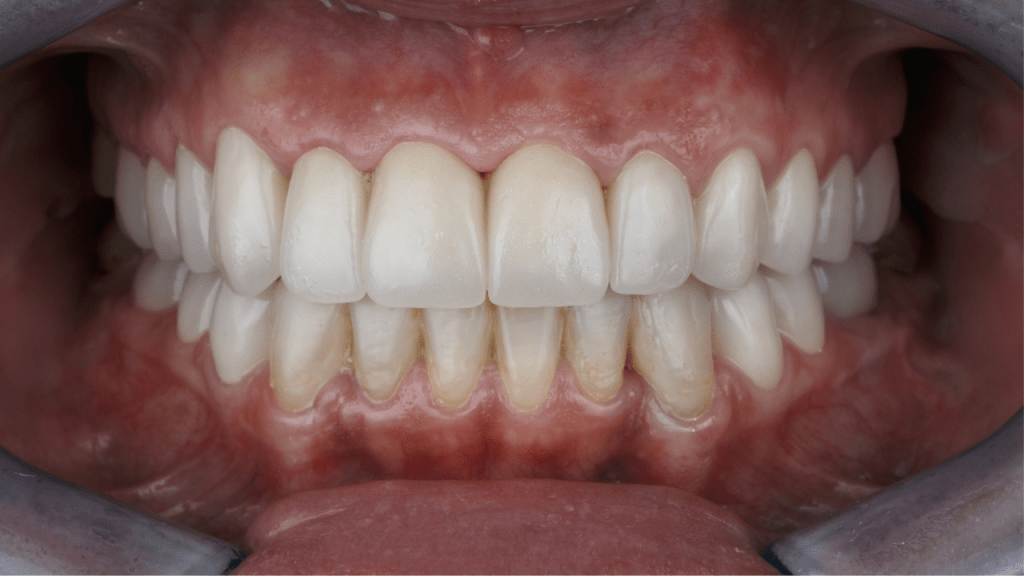
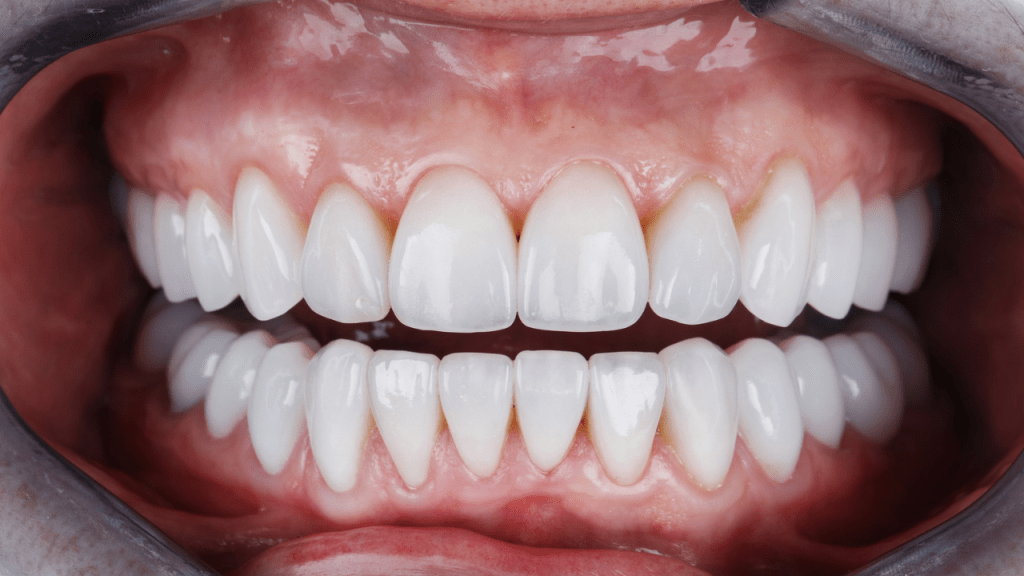
Zirconia ceramic crowns and bridges represent the most advanced solution in modern dentistry, offering exceptional aesthetic results.
The most beautiful and natural-looking crowns are made from zirconia ceramics..Zirconia crowns can be placed both on natural teeth and on dental implants, providing a strong, biocompatible, and visually seamless restoration.
Metal Ceramic Crowns
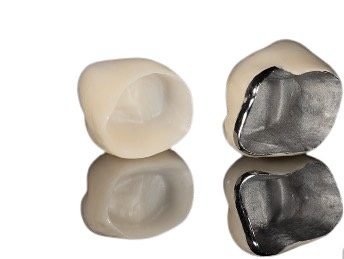
Throughout the history of dentistry, metal-ceramic crowns have been one of the most widely used and trusted solutions.
They consist of a metal base covered with multiple layers of ceramic, combining strength with aesthetic appeal.
Their widespread use is largely due to their long-standing presence in dentistry and their reputation as the “standard” choice for dental restorations.
Metal-ceramic crowns are primarily designed to restore function, but they also provide an acceptable aesthetic outcome, blending well with the surrounding natural teeth.
These crowns can be placed both on natural teeth and on dental implants.
Veneers
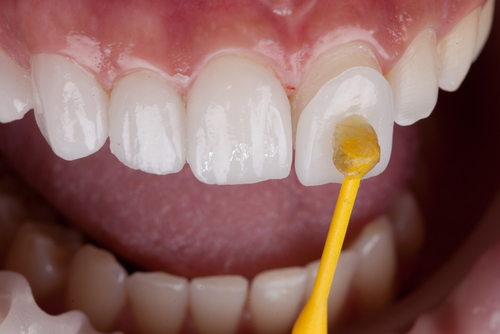
Veneers are thin shells made from various materials that are adapted to cover the front surface of the teeth.
They are used to correct the color, shape, and size of the teeth, creating a more harmonious and attractive smile.
Veneers are typically made from highly durable and resistant ceramics, crafted in extremely thin layers.
One of their main advantages over crowns is that veneers require minimal removal of natural tooth structure, preserving more of the healthy tooth while achieving excellent aesthetic results.
Total Dentures
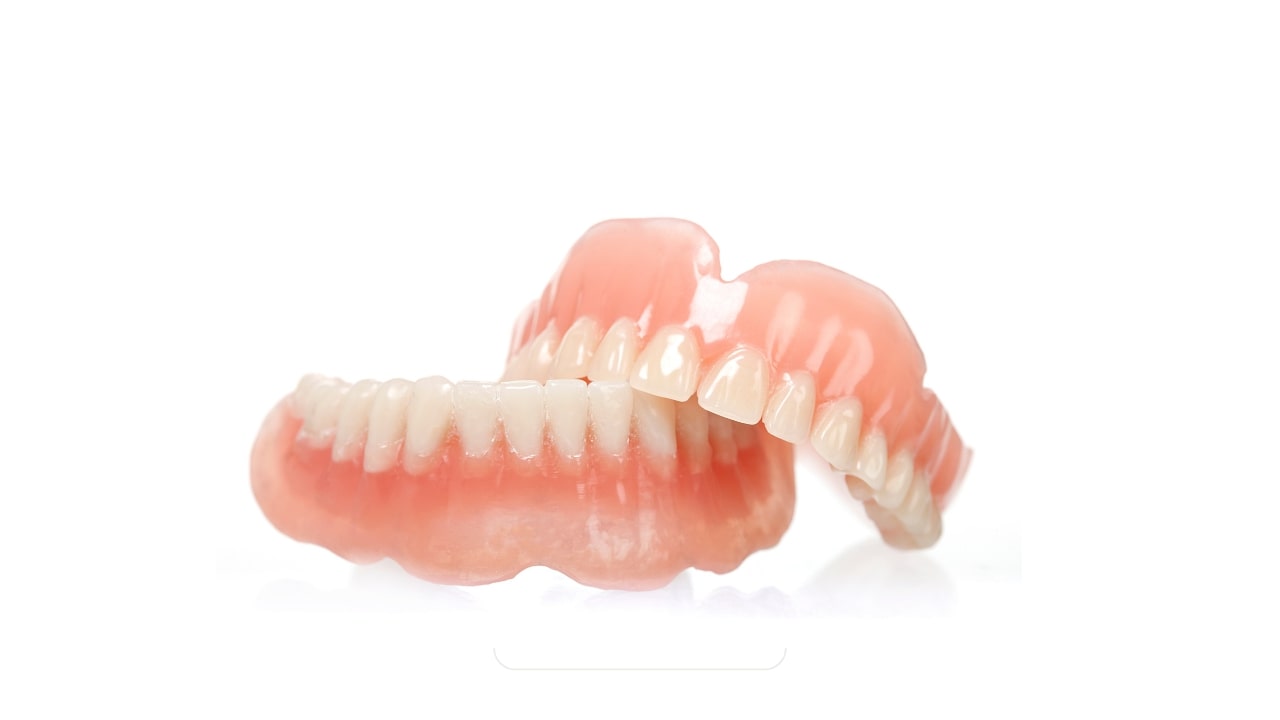
A complete denture is a prosthetic restoration designed for edentulous patients — in other words, for cases where no natural teeth remain in the jaw.
The denture rests directly on the gums, covering the alveolar ridge, and replaces the lost teeth, restoring both function and appearance.
Complete dentures are most commonly made from acrylic materials, with the artificial teeth also crafted from high-quality acrylic to ensure durability and a natural look.
Partial Dentures
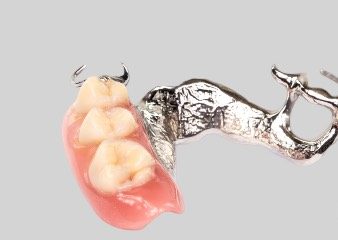
Partial acrylic dentures and partial skeletal dentures are prosthetic restorations designed to replace missing teeth in partially edentulous patients.
They are anchored to the remaining natural teeth using metal clasps or precision attachments, providing stability and retention.
Partial dentures rest on the gums, cover the alveolar ridge, and effectively restore both the function and aesthetics of missing teeth.
Dentures on Mini Dental Implants
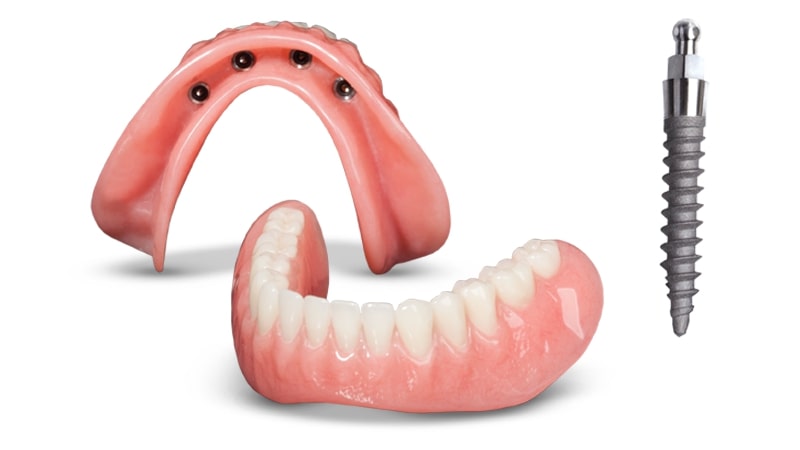
Mini dental implants are an ideal solution for patients who seek a more affordable procedure on implants. Mini implants offer a cost-effective alternative to conventional implants and full-arch restorations.
Dentures anchored to mini implants provide significantly greater stability compared to traditional dentures that rely solely on gum pressure.
Patients with a thin or weakened bone structure, who are not ideal candidates for standard implants without additional bone grafting procedures, can often benefit from mini implants, as they require less bone for successful placement.
Implant-Supported Dentures
Implant-supported dentures are the treatment of choice for edentulous patients who experience difficulties with the stability of their traditional dentures, problems with chewing, or discomfort due to gag reflexes, but who cannot and should not remain without dentures.
Implant-supported dentures are becoming an increasingly popular choice among our patients.

All on 4 / All on 6
The All-on-4 / All-on-6 technique is a method for placing dental implants and creating fixed prosthetic restorations in fully edentulous jaws.
This concept is specifically designed to address complex cases of complete tooth loss where traditional solutions are not viable.
The All-on-4 / All-on-6 approach is used in patients who do not have sufficient bone quality (thickness, width, height, density, or enlarged sinuses) to support the placement of six or more implants at a straight angle, which is the standard implantology procedure.
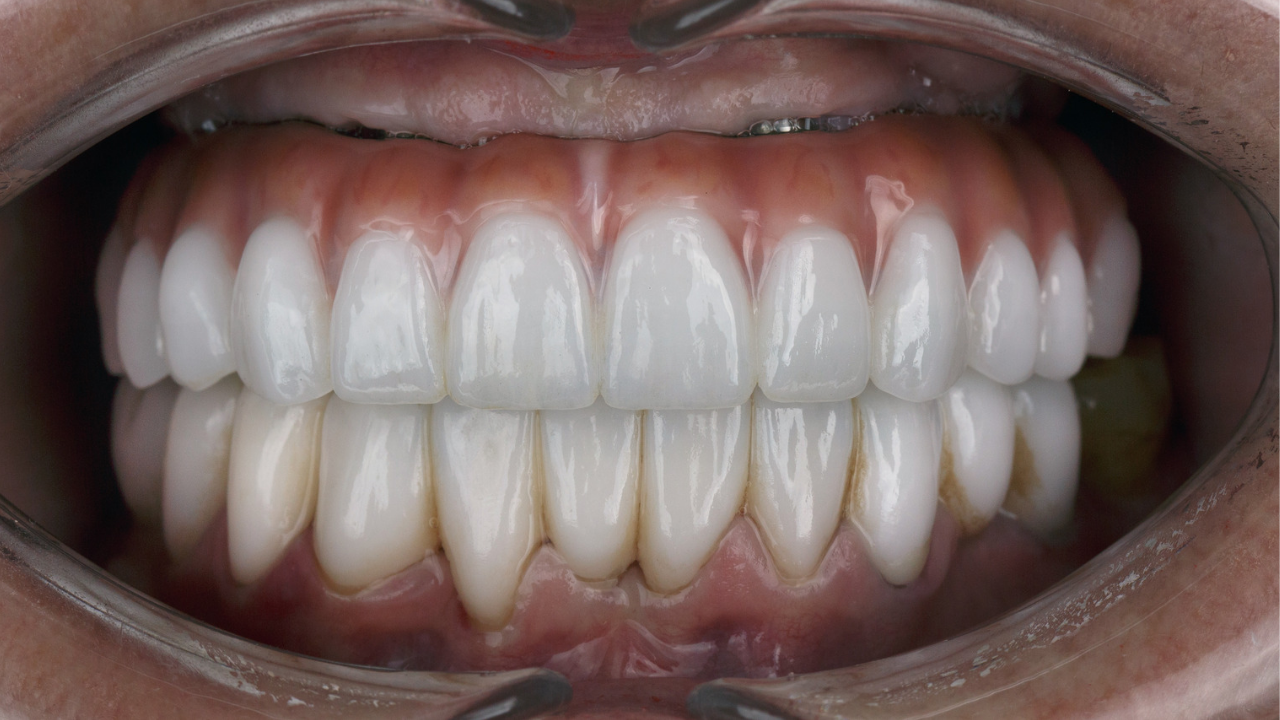
In an All-on-6 procedure, six implants are placed per arch, while in an All-on-4 procedure, four implants are used per arch.
After the implant placement, a healing period of approximately three months is necessary for the implants to fully integrate with the bone (osseointegration).
A few days after the implant surgery, the patient receives a temporary fixed prosthesis (made of acrylic), which is screwed onto the implants.
This provisional prosthesis will be worn throughout the healing phase to maintain aesthetics, chewing function, and speech.
After at least three months, the patient returns to the clinic to begin the fabrication of the final permanent prosthetic restoration, typically made of ceramic or a ceramic-based material for optimal durability, functionality, and aesthetics.


 Dr Pantazis | Dental & Beauty Clinic Belgrade