
Dental crowns are one of the most common and effective solutions in dentistry for restoring damaged, worn, or aesthetically compromised teeth.
In addition to providing protection and stability to weakened teeth, crowns also enhance the appearance of the smile, delivering natural-looking and long-lasting results.
Regardless of the reason for their placement, dental crowns offer a reliable solution for patients seeking a functional, healthy, and beautiful smile.
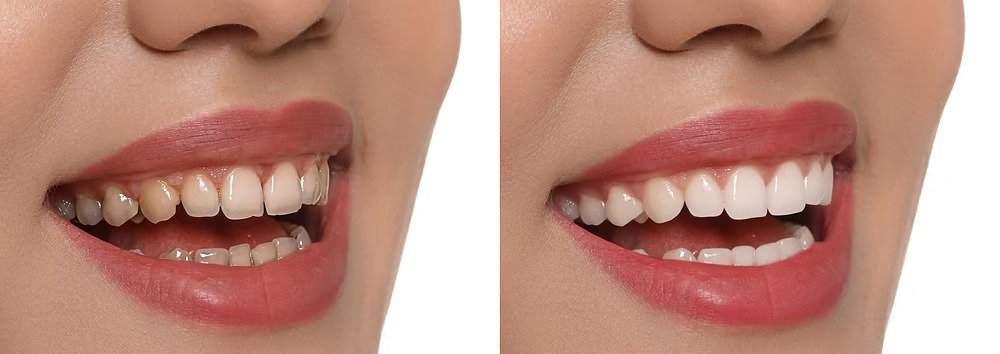
What Are Ceramic Dental Crowns?
Dental crowns are restorative dental prosthetics placed over a damaged tooth to strengthen, protect, and enhance its appearance.
They are crafted from high-quality materials such as porcelain, ceramic, metal-ceramic, or zirconia, making them exceptionally durable and visually appealing.
Indications for Dental Crowns
Dental crowns are recommended in various situations where it is necessary to restore the function and appearance of a tooth. Some of the most common reasons for placing a crown include:
Aesthetic reasons: Crowns can be used to cover teeth with irregular shape, color, or alignment, improving the aesthetic appearance of the smile.
Tooth damage: When a tooth is broken or significantly damaged, a crown provides protection and restoration.
Tooth weakened after a filling: When a tooth has been weakened by a large filling, a crown can prevent further fracturing.
Tooth after root canal treatment: After endodontic therapy (root canal treatment), the tooth becomes more fragile, so a crown is used for additional protection.
Missing tooth (bridge): Crowns are used as supports for a dental bridge when it is necessary to replace a missing tooth.
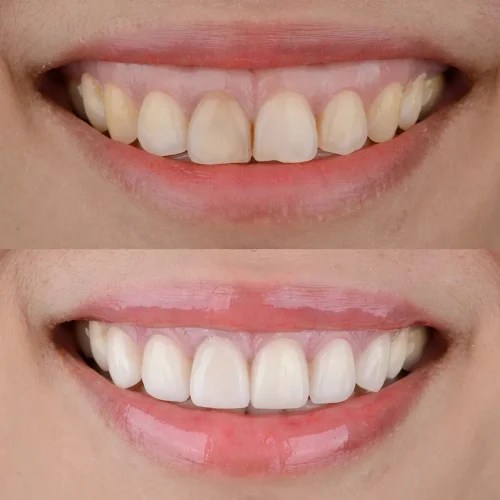
Dental Crown types
There are several types of dental crowns, and the choice of material depends on your aesthetic, functional, and financial needs. The two most commonly used types are:
Metal-Ceramic Crowns
Metal-ceramic crowns are a combination of a metal base and a ceramic layer. The metal base provides strength and stability, while the ceramic layer ensures a satisfactory aesthetic appearance.
Advantages:
Durability: The metal base makes these crowns highly resistant to chewing pressure.
Affordable price: Compared to all-ceramic crowns, metal-ceramic crowns are a more affordable option.
Aesthetically acceptable: Although they have a metal base, the ceramic layer provides a relatively natural look.
Disadvantages:
Less aesthetics: The metal underneath the ceramic may create a dark line along the gums, especially if gum recession occurs.
Lower translucency: They do not appear as natural as metal-free crowns.
Ideal for: Back teeth that are less visible when smiling and require greater strength.
All-Ceramic (Metal-Free) Crowns
All-ceramic crowns are made entirely of ceramic or zirconia, making them aesthetically superior to metal-ceramic crowns.
Advantages:
Natural aesthetics: Thanks to their translucency and ability to mimic natural teeth, they are ideal for front teeth.
Biocompatibility: They do not cause allergic reactions, making them suitable for patients with metal sensitivities.
No dark lines: Ceramic does not create dark margins along the gums, even after gum recession.
Disadvantages:
Price: They are more expensive compared to metal-ceramic crowns.
Slightly lower resistance to extreme forces: Although very durable, ceramics can be less resistant to extreme impacts compared to metal-based crowns.
Ideal for: Front teeth or when aesthetics are the priority.
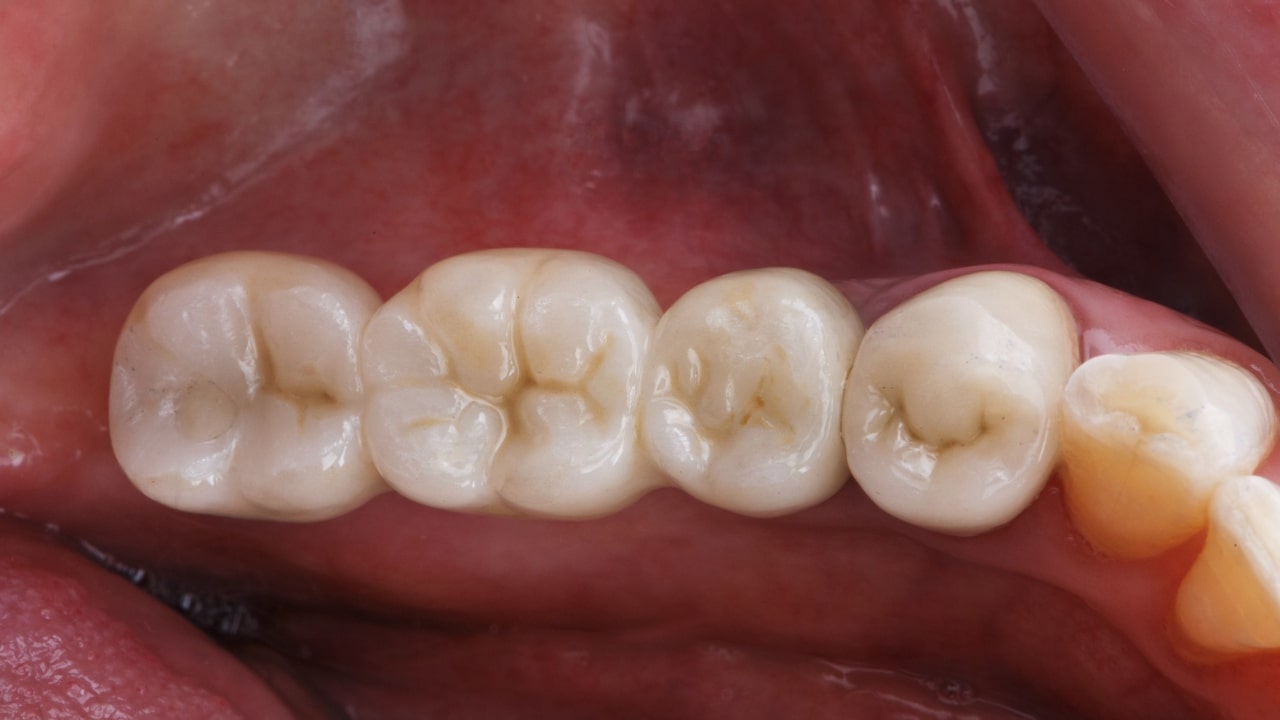
Dental Crown Fabrication Process
At our clinic, dental crowns can be fabricated in two ways: through a digital or an analog process. Both methods offer high quality and are adapted to the patient’s needs and schedule. Here’s how the process looks from your perspective:
Digital Fabrication of Ceramic Crowns (CAD/CAM Technology)
The digital method enables faster and more precise crown fabrication, with a minimal number of visits.
How does the process look?
First visit – Examination and tooth preparation.During the first visit, the dentist performs a detailed examination and prepares the tooth for the crown.After preparation (tooth reduction), an intraoral scanner is used for precise digital impressions instead of traditional molds.Based on the scans, the crown is designed using CAD/CAM software.
In some cases, a temporary crown is placed so you can function normally until the final crown is ready.
Second visit – Placement of the final crown:The crown is fabricated within a few hours or days, depending on the complexity.During the second visit, the dentist places the crown, checks the fit, and makes any necessary adjustments before cementation.After cementation, your crown is ready for use.
Number of visits: 2 (in some cases, the crown can be completed the same day).
Benefits for the patient:
- Speed and precision
- Fewer visits
- No need for traditional impressions (more comfortable process)
Analog Fabrication of Ceramic Crowns (Traditional Method)
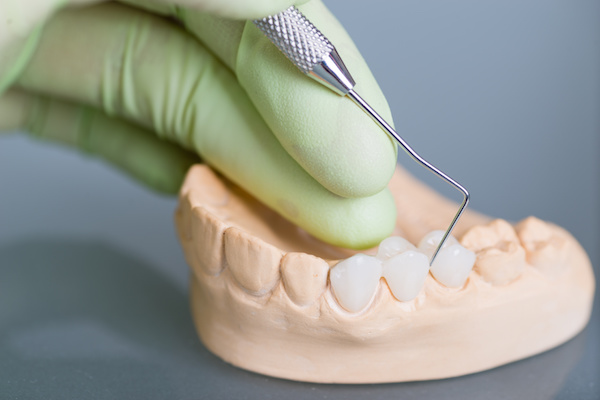
This is the classic method of crown fabrication, relying on traditional impressions and manual work in a dental laboratory.
How does the process look?
First visit – Examination, preparation, and taking impressions:The dentist prepares the tooth (tooth reduction) and takes traditional impressions using special materials.Based on the impressions, a temporary crown is made to protect the tooth until the final crown is ready.
Second visit – Crown trial fitting:Once the crown is fabricated in the lab (usually within 5–10 days), a trial fitting is scheduled.The dentist checks the crown’s fit and makes necessary adjustments.
Third visit – Crown placement:After final adjustments, the crown is cemented and ready for use.
Number of visits: 3 (in rare cases, an additional trial fitting may be needed).
Benefits for the patient:
- A proven method with a long tradition
- Suitable for more complex cases

Care After Dental Crown Placement
Once the crown is placed, it is important to take proper care of it to ensure its longevity. Here are some tips for post-treatment care:
Regular dental visits: Regular check-ups with your dentist will help maintain the health of your teeth and crowns.
Regular brushing: Although the crown is artificial, the tooth underneath is still susceptible to decay. Brush your teeth regularly and use dental floss to maintain gum and tooth health.
Avoid hard foods: It is recommended to avoid chewing hard foods such as ice, hard candies, and nuts to prevent damage to the crown.
Benefits of Dental Crowns
Getting a dental crown brings numerous functional and aesthetic benefits:
Boosted confidence: Beautiful and healthy crowns can significantly improve your smile, restoring your confidence in social and professional situations.
Improved functionality: Crowns restore full function to your teeth, allowing you to bite and chew food normally.
Protection of damaged teeth: Crowns protect damaged or weakened teeth from further fracture and deterioration, extending their lifespan.
Natural appearance: Thanks to modern materials, crowns are designed to look natural and blend seamlessly with your smile.
Durability: Well-made and properly maintained crowns can last for many years, providing a long-term solution to dental problems.
All-on-4 & All-on-6 Systems
These revolutionary solutions allow for full jaw reconstruction using only 4 or 6 dental implants.
 Dr Pantazis | Dental & Beauty Clinic Belgrade